

WAR AND DEMOCRACY
Lawless and Alone?

“Confucius said, ‘The best neighborhood is where benevolence is to be found. Not to live in such a neighborhood when one has the choice cannot by any means be considered wise.’ Benevolence is the high honour bestowed by Heaven and the peaceful abode of man. Not to be benevolent when nothing stands in the way is to show a lack of wisdom. A man neither benevolent nor wise, devoid of courtesy and dutifulness, is a slave,” (from Mencius, Book 2, Part A, no. 7, 4th Century BCE; Penguin classics, p. 83).
“And finally, to sum up this matter, I say that both governments of princes and of the people have lasted a long time, but both required to be regulated by laws. For a prince who knows no other control but his own will is like a madman, and a people that can do as it pleases will hardly be wise. If now we compare a prince who is controlled by laws, and a people untrammeled by them, we shall find more virtue in the people than in the prince; and if we compare them when both are freed from such control, we shall see that the people are guilty of fewer excesses than the prince, and that the errors of the people are of less importance, and therefore more easily remedied. For a licentious and mutinous people may easily be brought back to good conduct by the influence and persuasion of a good man, but an evil-minded prince is not amenable to such influences, and therefore there is no other remedy against him but cold steel,” (from Niccolò Machiavelli, The Discourses, Chapter LVIII, 1513-1517 CE, in Modern Library Edition, p. 265).

The Sage Mencius
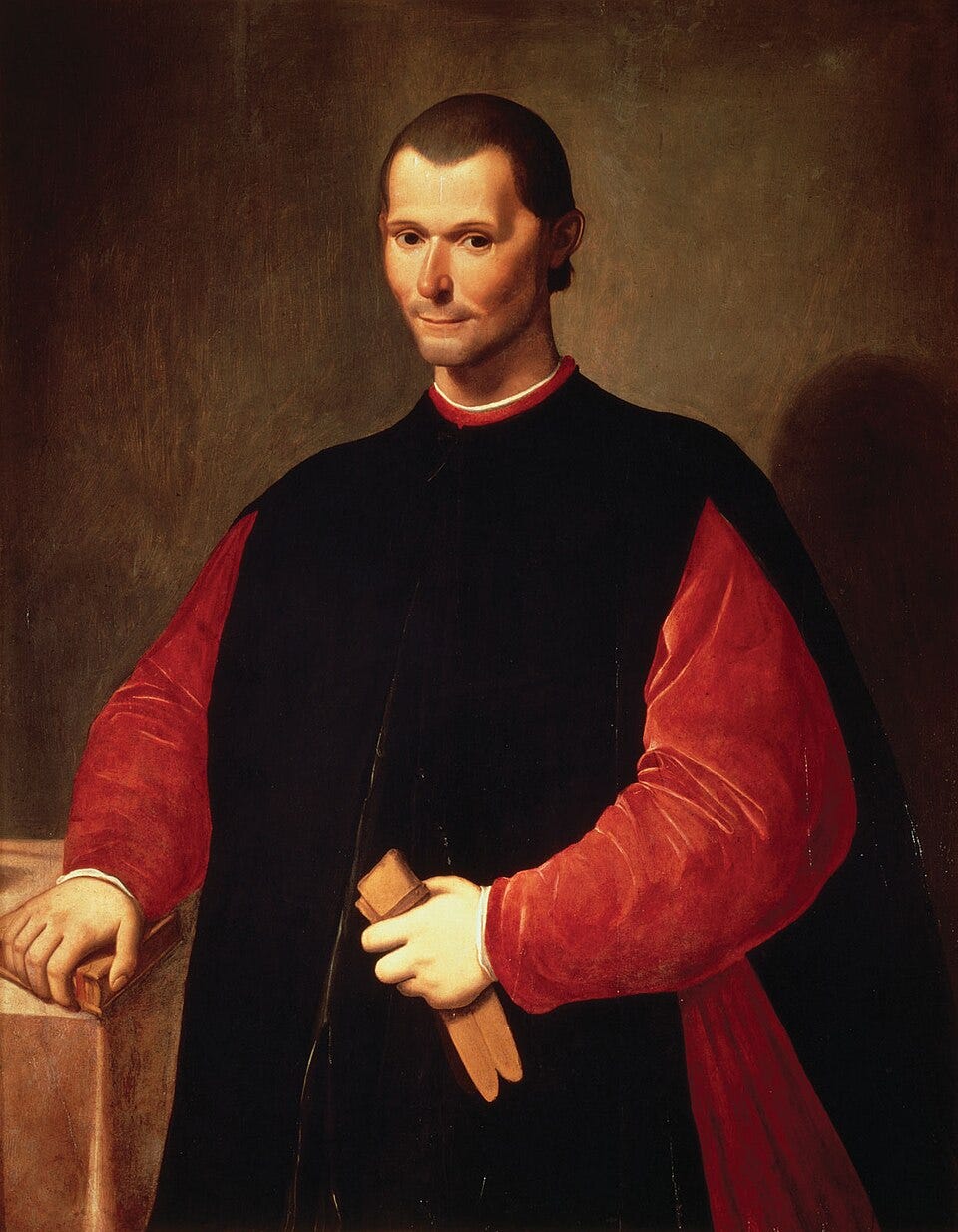
Machiavelli
The powers of Article One of the United States Constitution do several things. By being presented first—as Article One—the powers of Congress were intended to assert the preeminent position of the U.S. Congress in the tripartite balance of power system designed by the Constitutional framers in 1787. This is why Congress (the House and Senate) are referred to as the Article One Branch. In addition, the several substantive governing powers of Congress are herein enumerated. Of course, it is misleading to assert an “original intent” argument into this discussion because well we know that conditions and powers have changed over time. All the same, Congress has significant powers (if deployed), and these were intended as a substantial check and a balance in the constitutional order—in particular against the powers of Article Two—the Chief Executive. As James Madison argued in Federalist No. 51, the partition of power is crucial:
“To what expedient then shall we finally resort, for maintaining in practice the necessary partition of power among the several departments, as laid down in the constitution? The only answer that can be given is, that as all these exterior provisions are found to be inadequate, the defect must be supplied, by so contriving the interior structure of the government, as that its several constituent parts may, by their mutual relations, be the means of keeping each other in their proper place,” (Federalist No 51, 1787-88).
Madison later argues in one of the more famous passages of The Federalist, that the Constitution is constructed with human nature in mind:
“Ambition must be made to counteract ambition. The interest of the man, must be connected with the constitutional rights of the place. It may be a reflection on human nature, that such devices should be necessary to control the abuses of government. But what is government itself, but the greatest of all reflections on human nature? If men were angels, no government would be necessary. If angels were to govern men, neither external not internal controls on government would be necessary…A dependence on the people is, no doubt, the primary control on government, but experience has taught mankind the necessity of auxiliary precautions,” Federalist No. 51, Madison, 1787-88).
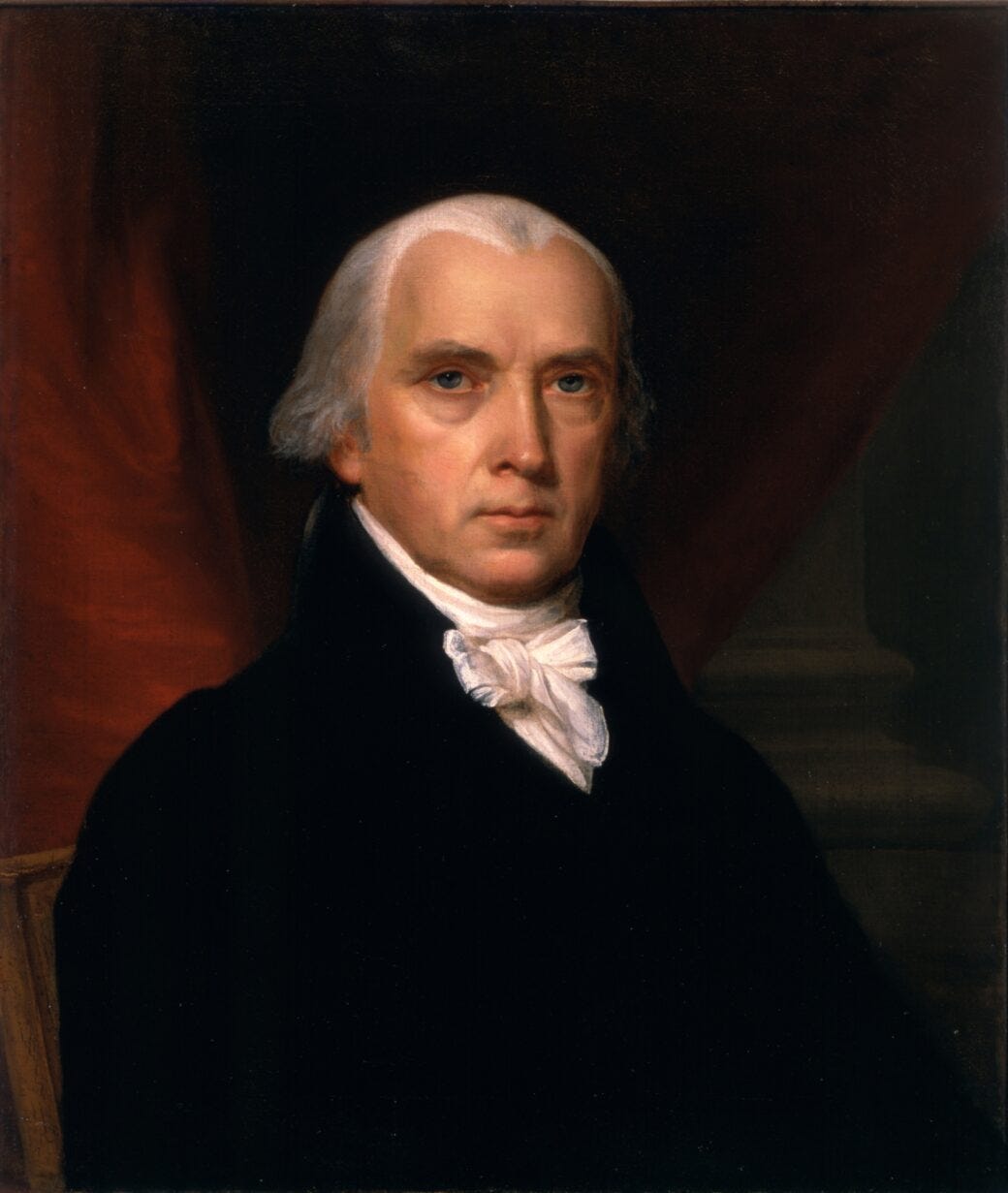
James Madison
In 2026, the Iran War has called into question (as has so many corrupt and despotic actions by President Trump and his regime) the resilience of the auxiliary precautions Madison mentions are written into the U.S. Constitution. Niccolò Machiavelli (1517) and Madison both preferred government ruled by law as superior to government by tyranny. Rule of law calls the citizens to actively consent to policies and rules, and the government is restrained by the boundaries of law as regards the people. As far as Republics are concerned for Machiavelli, they remain more resilient because they are erected on a foundation of the peoples’ support, and will have the better chance at legitimacy and wise policy over time. Tyrants and despots cannot be trusted.
James Madison was aware of the dangers posed by demagogues and though he abstained from Machiavelli’s recommendation of ”cold steel,” the American Revolution was evidence that the alternatives to law are either violence or oppression. A Republic for Madison maintained the promise of self-determination, within the balance of different interests and stakeholders, held together in the American system. War is among the gravest threats to democratic systems, especially in the hands of the aspiring despot and oligarch like Trump, because it invites lawlessness, dishonesty, and dark propaganda. The first casualty of war, it is often said , is the Truth—and the Iran conflict bears this out.
The neighborhood of benevolence that Mencius described centuries ago (above) is one built on a legal order that protects the varied and competing interests and rights of people. The modern constitutional system is critical in the origin and the vitality of modern democracies. Americans had surprising experience writing constitutions leading up to 1787, because they had worked at writing charters for their local communities from their arrival as colonists. Meeting in common to negotiate laws and policies was something that Americans' had practiced, but more, the idea of constitutionalism was centrally located in the American soul. According to Bernard Bailyn, in the Ideological Origins of the American Revolution (1967):
“The word ‘constitution’ and the concept behind it was of central importance to the colonists political thought; their entire understanding of the crisis in Anglo-American relations rested upon it,” (Bailyn, 1967, p. 67).
In citing John Adams discussion of constitutions, Bailyn pointed out that the Americans likened a constitution to the “constitution” of the human body, as a network of nerves, organs, muscles and a vascular system that sustains a human being. Ultimately, Adams would say:
“A constitution of government, analogously, Adams wrote, is ‘a frame, a scheme, a system, a combination of powers for a certain end, namely,--the good of the whole community,’” (p. 68).

Bernard Bailyn, THE IDEOLOGICAL ORIGINS OF THE AMERICAN REVOLUTION
I cannot recall where I first heard the definition that a “constitution is the concrete manifestation of the social contract,” but it became a touchstone in my teaching over the years. Each word of the definition has meaning. A constitution is the written (hence concrete) manifestation (meaning organically derived legal and political culture of a people), that frames the principles for government and political order. Hence, a constitution is a power map for government, but is also, just as John Adams suggested, a framework designed to procure the public good. In a well-conceived and healthy constitutional system this conception accurately reflects the embedded and necessary principles of the community as it collectively works together to acquire the common good. The understandings that form the social contract are those things a community shares, and understands about itself, and has tacitly accepted as their identity and reason for existence. The social contract, therefore, must precede the constitutional, written, contract.
Successful constitutions embody the historical, social and cultural obligations of a people. Historical experience has shown that this is why imposing a constitution on other peoples and nations, for example, conducting regime change and/or nation-building, are perilous adventures if the eventual goal is a legitimate constitution. Given this reality, the dangers of Donald Trump’s trampling on law and constitution is undoing 240 years of constitutional history. It is also why Trump’s fascist enterprise and corruption are fairly described as alien to our social contract, if not new to American politics. The war in Iran is not only a violation of international law and order, but the attack is for many reasons a violation of American law and order. The great threat underway in our time is the destruction of Article One powers, to be replaced by a despotic executive. Article One, section 8 of the U.S. Constitution enumerates the 18 substantive powers of Congress. These powers include the power to collect taxes, regulate commerce, to establish rules for Naturalization, build roads and post offices, and more. In the context of the war in Iran, the U.S. Congress has the power:
“To declare War, grant Letters of Marque and Reprisal and make Rules concerning Captures on Land and Water; To raise and support Armies, but no Appropriation of Money to that Use shall be for a longer Term than two years,” (U.S. Constitution Art. 2, Sec. 8).
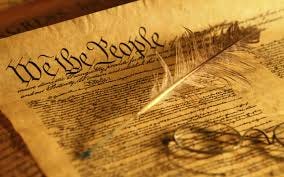
The U.S. Constitution
The power to declare war by Congress was further buttressed by the War Powers Act (WPA) of 1973, (50 U.S.C. 1541–1548), which was adopted over the veto of then President Nixon. The WPA was intended to further limit the extensive powers of the Chief Executive to deploy troops and engage in war, following the experience of the war in Vietnam. The WPA requires the President to come to Congress within 48 hours of the deployment of troops or the engagement in hostility—and further places 60 to 90 day limits on executive actions unless Congress declares war or offers further authorization. All Americans know that not only has President Trump not explained the War in Iran to the American people, but he has also contemptuously violated law and Constitution in engaging in War. Trump has dismissed Congress from the process. No amount of lying, or Orwellian twists of the English language, (e.g., “excursion,” “decisive action,” “regime change,” “not regime change,” “mission,” “Unconditional Surrender,” etc.), can explain engaging in war in Iran without Congressional authorization.
The problem with laws and constitutions is that they are not self-executing. Laws must be implemented by people, and the competent leaders responsible for their execution. At the moment, the struggle in a lawless America concerns who can or will execute the laws? The recurring question among my friends and students is as follows: “If the laws say one thing, then why or how does Trump continually get away with violating the laws, and doing something else?” The answer is because: people must implement the laws. This is especially true in a democracy. Courage and integrity, as well as a sense of obligation is required. It is the reason Republics are preferred to oligarchy and tyranny—because we as citizens are commonly responsible to implement the laws we live by—whether on the highways or in our neighborhoods. Dictators thrive in environments where the citizens and surrounding elites are afraid and unwilling to use the laws and institutions to insure that ambition is counteracted by ambition.
The assault on democracy is twofold in the context of the Iran War. First, as I have argued, there is a process question. The Constitution, and the legal customs we have employed for both good and ill over two centuries regarding war, have been sundered by Trump. In the second place, the war in Iran right now is also an escalation in the conflict for the American soul. The moral justifications for this war do not stand the test of history nor decency. The United States’ difficult history with Iran should be traced to 1953, when we instigated our first “regime change” enterprise. In the midst of the Cold War, America and the CIA (under the guidance of the Dulles brothers in the Eisenhower administration) overthrew the legitimately elected Iranian leader Mohammad Mossadeq to install the royal family of the Shah into power. This was followed by years of the terribly repressive regime of the Shah until 1979 and the departure and overthrow of the Shah and the revolution led by the Ayatollah Khomeini (February 1979)—which included the Iranian seizure of the American embassy and the hostage crisis (November 1979—449 days). The Iranian revolution helped insure the failure of the administration of President Jimmy Carter and the election of Ronald Reagan. America’s hostile relationship continued through the years, including the arrival of the second Ayatollah Khamenei as supreme leader, culminating in the Iranian Nuclear Deal or JCPOA, negotiated under President Obama in 2015. The JCPOA deal lifted sanctions on Iran while attempting to insure that Iran could never develop nuclear weapons technology. Donald Trump unilaterally withdrew the United States from that deal in 2018, and reimposed sanctions. Trump has since instituted increasingly hostile policies with Iran, including the killing of general Qasem Soleimani, (General of the Quds force) by a targeted missile strike in 2020.
Now, at the behest of Israel and its leader Benjamin Netanyahu, Trump agreed in 2026 to go to war in Iran—giving Israel a long-desired goal of the destruction of Iran—which neither helps nor secures American interests or the nation. We have broken our laws in going to war, and we are indulging in a culture of lies, propaganda and violence that strikes at the very core of democratic principles. America has purposely murdered the Supreme Leader, Ayatollah Khamenei, only to see his son Mojtaba Khamenei elevated to succeed him as Supreme Leader. The son is expected to be even more extreme than his father, and that may be accentuated by the fact that the air strikes killed his wife and son. By Executive Order under President Ford the United States is legally prohibited from targeting the leadership of other nations for murder. Again—this violation is by law, but also reflects a moral boundary in a rule-based system America should not cross.
Setting aside the cruelty and bad behavior of the Iranian Regime, the choice for Trump and America to go to war in 2026 is unexplained, unwarranted, unjustified and unauthorized. We have no idea how we are paying for this war that has no strategy, no end game, and no rationale beyond “Bibi made us do it.” (See Marco Rubio and the Secretary of State). How much more should we pay? America lies about the murder of innocents in an Iranian girls school, while alienating our allies. Consider the current irony that Vladimir Putin is helping Iran target United States’ assets in the region, but has received relief from the sanctions of the Ukraine War, to sell oil to nations like India, because of soaring prices caused by the conflict. Thus, Russia is enriched and more capable of prosecuting its war in Ukraine. Meanwhile the Ukrainian government and military is asked to help the U.S. with the drone technology being used by Iran to target U.S. assets. It is insanity.

Secretary of State Rubio with President Trump
The question of the war in Iran is not about the good guys and the bad guys. Iran is a terrible regime with malevolent designs on its neighbors and citizens. A theocratic autocracy is a universe away from democracy and Iran is dangerous. It is also a nation of over 90 million people who have not folded after years of war, tumult and conflict, from its long war with Iran to the long history of economic sanctions. In addition, although it is true that the history of the American relationship with Iran is a legacy of injustice, terror, violence, and criminality, there is no evidence that the path of punishment and violence produces any good. In fact, the alternative, only briefly experimented with, might have had long term benefits for everyone. We will never know. But—the bottom line is that this war is a question of justice, morality and human rights. Fighting alongside a bad actor like Benjamin Netanyahu will be counted among the most grotesque images in American military history. Even where a democracy has good intentions humility requires introspection. There is a tragedy here. One can draw a through line from 1953 to 2026, and see how America came to this place based on one damn lousy decision after another. Moreover, that tragedy is laden with a mountain of the corpses of the innocent as well as the guilty. In 2026, Trump chose this war. It is no excursion. It is a war.

President Trump and Pete Hegseth
Trump, through the actions of his Secretary of Defense Pete Hegseth has decapitated much of the legal authority in the Pentagon (firing the JAG officers) and removing competent generals ( in the Joint Chiefs of Staff) to be replaced by military leadership afraid to oppose President Trump. América is flying into the Iran War at the behest of an Israeli government that has lost all of its moral authority—and especially since the destruction of Gaza. The Trump administration is without moral and professional leadership, while breaking the legal system that undergirds democracy. The opposition to the War must come from the people—but in that the power of the Article One branch still holds out glimmers of hope. The upcoming Fall elections are critical to our future, and there is no mistake—these are perilous days. With good fortune and full hearts, imagine the days after the November election with Hakeem Jeffries as Speaker of the House. Imagine a Congress that asserts its powers of the purse, of oversight, and over the declaration of war. In the future we will need to reform our Constitution, but the first order of business now is to save it. In perilous times we can see the goal ahead. As Madison suggested, that is the other alternative to our constitutional “auxiliary precautions.” Democracy—everywhere—truly hangs in the balance.
I honestly wish every time I could get you as big a following as Heather Cox Richardson —not for fame but because we really need you Tony.
Your essay makes an important point that laws and constitutions ultimately depend on citizens and institutions willing to enforce them. I agree with that premise. But when it comes to Iran, there is another tradition in American strategy worth remembering: the containment approach associated with George Kennan during the Cold War. The Long Telegram.
Containment was never a perfect doctrine, and its success against the Soviet Union was partial. The Cold War was costly, morally ambiguous at times, and often badly implemented. Still, it managed to limit Soviet expansion without triggering a direct great-power war, while allowing internal weaknesses in that system to accumulate over time. And its inherently satisfying approach somehow had a ring of truth that kept both Democratic and Republican presidents invested in its approach.
Something like that patience might be worth considering with Iran. The regime is plainly repressive and destabilizing, but repeated military strikes, sweeping sanctions, and proxy wars also have the predictable effect of strengthening hardliners and creating new generations who see the United States primarily as an enemy.
War also has a way of concentrating power in the executive branch and sidelining the constitutional processes your essay rightly defends. A strategy closer to containment—slow, frustrating, and imperfect—may ultimately be more consistent with both American interests abroad and constitutional balance at home.
In any case, we need lots of people generating lots of ideas about how to move forward with Iran, once we find a way past this current crisis, brought to us by The Gang That Couldn’t Shoot Straight.